Mason Lanover
The Legend of William OhMason Lanover, also called Mason and identified by his Class as the Nuker, is defined by a combustible contradiction: he wants to be recognized as genuine, formidable, and worthy of a legend, yet his pride repeatedly makes him react before he can think. His rivalry with William Oh begins in wounded vanity, but the plot gradually exposes a more capable and less isolated figure. Mason can panic, obstruct, and lash out; he can also cover an ally’s back, endure danger, read a tunnel system, and stand against the Kaith when retreat would be easier. His significance lies in that unstable movement from status-conscious Lordling to useful Climber.
Identity and Early Motivation
Mason enters the story as a Nuker, a role whose central discipline is patience. A Nuker is expected to observe and do nothing for extended periods until the moment arrives to rain fire, a function that makes timing and composure more important than constant motion. Mason’s temperament is almost the inverse of that ideal. He is quick to anger, highly conscious of how others judge him, and determined that his career should begin with a deed worthy of his name.
His social position intensifies the pressure. Mason is associated with the Lanover name and is treated as a rich kid by William Oh’s circle. Reggie later describes the possibility of Mason reaching level thirty as a daunting benchmark, while also implying that Mason’s father, Mr. Lanover, exerts enough influence to make Party affiliations politically meaningful. Mason therefore does not experience advancement as a private game achievement. His Class, level, Party, and reputation are all bound to family expectation and public comparison.
That pressure becomes visible when he reacts to William Oh’s sudden popularity. Mason believes William deliberately invented rumors about himself before his Establishing Quest in order to attract girls. The rumors work: people accept William’s spurious claims, and Mason feels that the reward has gone to a fraud rather than to someone who has earned it. His anger is not merely romantic jealousy or ordinary annoyance. He frames it as a defense of authenticity, insisting that he is real while William is not. The insistence reveals the insecurity beneath the accusation: Mason needs the world to distinguish inherited status and legitimate ability from performance.
Rivalry with William Oh
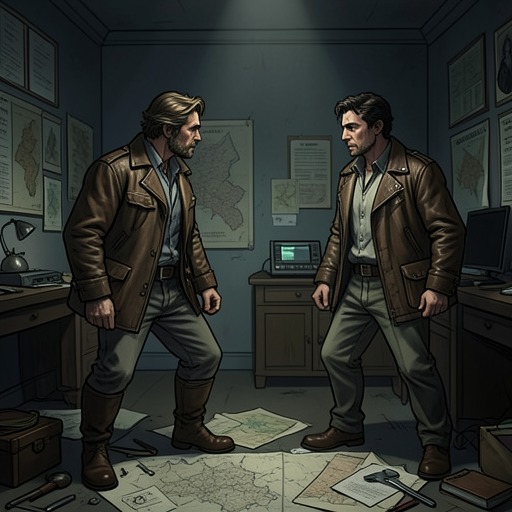
Mason’s confrontation with William Oh is deliberately theatrical. He calls William a spurious cad, accuses him of building a well of pernicious lies, and promises to become the instrument of Karma that gives him his just desserts. The language inflates a personal grievance into a moral crusade. William’s reputation has become so intolerable to Mason that ordinary disagreement no longer seems sufficient; Mason wants exposure, punishment, and public vindication.
June punctures this self-dramatization. When Mason asks for advice about controlling whom girls admire, she tells him that such control is impossible and that trying to impose it makes him look foolish. Her judgment identifies the central weakness in Mason’s campaign: he is attempting to defeat William’s appeal by proving that William should not possess it, but the effort itself makes Mason appear more consumed by the rivalry. The conflict is therefore self-defeating before it becomes openly dangerous.
Mason’s anger also creates practical risk during the group’s early trials. When he loses composure and believes a mentally challenged cripple may die as a result, he rushes forward while shouting in fury. The reaction is reckless, but it is not indifferent. Mason is concerned that his legend should not begin with another person’s death caused by his failure to control himself. Even at his most self-regarding, he remains capable of recognizing responsibility and acting to prevent a fatal consequence.
The same tension governs his later assessment of William. William acknowledges that Mason did not actively sabotage the group; instead, Mason panicked, distracted him during the fight, and then covered his six effectively. This is an important shift in the rivalry. William does not erase Mason’s fault, but he refuses to reduce him to it. Mason’s conduct can be both harmful and useful in the same sequence, and the recognition gives their antagonism a grudgingly accurate foundation rather than a simple hero-versus-villain opposition.
Party Politics and Professional Ambition
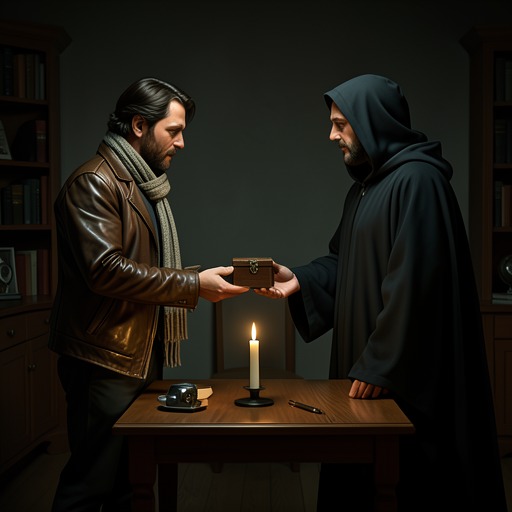
Mason’s first sustained attempt to convert reputation into authority appears when he approaches William Oh and Loth after a successful Quest. He praises Loth’s contribution and says that it may eclipse his own, then treats Loth as a potentially valuable professional recruit. Mason offers one hundred gold per Quest and fifty gold for each floor advancement, with special missions negotiable and higher floors bringing increased pay. The offer reveals that he understands Climbing as organized labor as well as personal adventure: Classes are resources, Parties are institutions, and specialized abilities can be purchased.
His recruitment pitch is also strategically informed. Mason recognizes that a Saboteur could provide a Party with the home-field advantage, and he openly considers how such a role would strengthen his team. This is a more mature form of ambition than his earlier rivalry with William. Instead of merely denouncing another Climber, Mason is evaluating complementary capabilities and trying to build a functioning expedition around them.
Loth nevertheless chooses William Oh’s Party. Mason’s face pales, but he keeps the offer open rather than retaliating. The moment is a quiet test of whether his pride can survive rejection. He is disappointed and visibly wounded, yet he does not turn the refusal into another public accusation. His professional instinct briefly outruns his possessiveness.
Mason’s Party is called The Lanover Expedition, a name that makes the connection between exploration and family identity explicit. Reggie suggests that William should ask Mason to join his Party only after Mason reaches level thirty, or after William somehow persuades Mason to join him; Reggie adds that family pride would make such a transfer especially explosive because Mr. Lanover would be furious if his son belonged to someone else’s Party. Mason’s importance therefore exceeds his combat role. His membership is entangled with lineage, hierarchy, and the social consequences of choosing one leader over another.
Competence Under Pressure
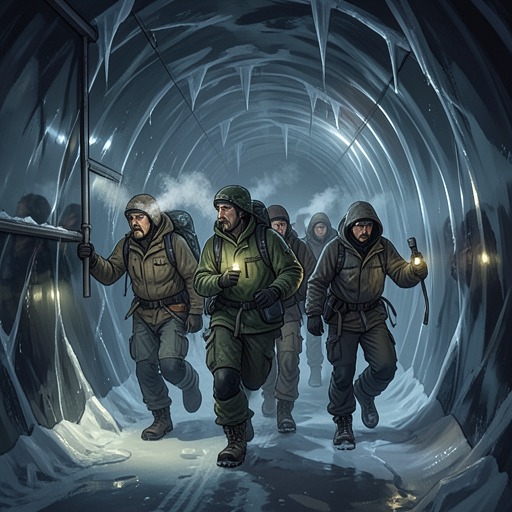
Mason’s strongest corrective to his earlier image comes in the Ice Caves. By this point, he is recognizable to William as the familiar Nuker warding off an onslaught of Kaith while his team struggles to reach him. The scene gives concrete form to the Nuker’s patient destructive function: Mason holds his position against overwhelming pressure, buying time for others even though his own Party is having difficulty getting to him.
His rescue is collaborative rather than triumphant in isolation. Reggie helps Mason back onto the stone side of the cavern system, while Loth’s rope bridge links the Yeti Ice Cave to the Kaith tunnels and provides better footing for hauling him in. Mason’s survival thus depends on the same Party network he had earlier treated as a structure to recruit and command. The bridge, the terrain, and the allies all become part of the action, while Mason’s contribution is to remain in the fight long enough for that network to reach him.
Afterward, Mason introduces a mysterious helper as Billy Goat and identifies the group as The Lanover Expedition. The introduction is awkward and guarded, but it shows Mason managing social information under uncertain circumstances. He does not simply arrive as an isolated combatant; he returns with an affiliation, a team identity, and a person whose prior assistance he considers worth presenting to his Party. Even when the evidence around him is incomplete, Mason continues trying to maintain a coherent public role.
His acuity also makes him useful outside direct bombardment. During a tunnel pursuit, Mason and June are among the group’s sharpest eyes and ears. They listen for followers and recognize familiar landmarks, functioning as scouts even though Mason’s principal identity is the Nuker. His abilities do not eliminate his volatility, but they give him practical value in observation, navigation, and survival. The story repeatedly places his self-image beside evidence of what he can actually do.
Relationships, Change, and Narrative Role
Mason’s relationship with William Oh develops through a cycle of accusation, comparison, assistance, and reluctant acknowledgment. At first, William represents everything Mason believes is unfair about social recognition: a person who can make girls and fellow Climbers respond to an invented legend. Later, William becomes someone who can judge Mason’s conduct with precision, crediting him for covering the group’s rear while still recognizing the danger caused by his panic. Their antagonism becomes productive when it forces both men to distinguish reputation from performance.
His relationship with June is more corrective than affectionate. June does not flatter Mason’s grievance; she tells him that his attempt to regulate admiration only makes him look foolish. Her intervention matters because it gives the rivalry an external standard. Mason’s feelings are real, but their intensity does not make his interpretation correct. June functions as the person willing to translate his grand moral language back into ordinary social consequence.
Mason’s association with Reggie and Loth similarly reveals the limits of status. Reggie helps him physically after the Kaith encounter and speaks about his level and Party as matters of practical consequence. Loth becomes the recruit Mason wants but cannot secure, choosing William instead. These exchanges place Mason in a competitive economy where money, family, Class utility, courage, and personal loyalty all matter, but none guarantees control.
The character’s trajectory is not a clean conversion from arrogance to humility. Mason remains ambitious, proud of The Lanover Expedition, and invested in the making of a legend. What changes is the evidence available to others and to himself. His panic does not prevent him from acting; his rivalry does not erase his ability to cooperate; his concern for reputation coexists with genuine concern for another person’s survival. By the time he is seen holding back the Kaith, the question is no longer whether Mason is authentic. His actions have begun answering it more convincingly than his speeches ever could.
Mason therefore serves as a counterpoint to William Oh’s constructed fame. William’s reputation spreads through hype, rumor, and stories of impossible abilities, while Mason initially demands recognition through the moral language of being real. Yet Mason’s own name also carries expectations, family pressure, and the promise of a future legend. The narrative uses him to show that authenticity is not a fixed possession granted by birth or declared in anger. It is repeatedly tested in the moment when a Climber must decide whether to protect an image or protect the people beside him.